Capsule
Activewear In Your Colours
Discover the history of activewear and shop our curated edit of sports pieces categorised by colour.
All products are selected by our team. We make a commission on the sale of these products.
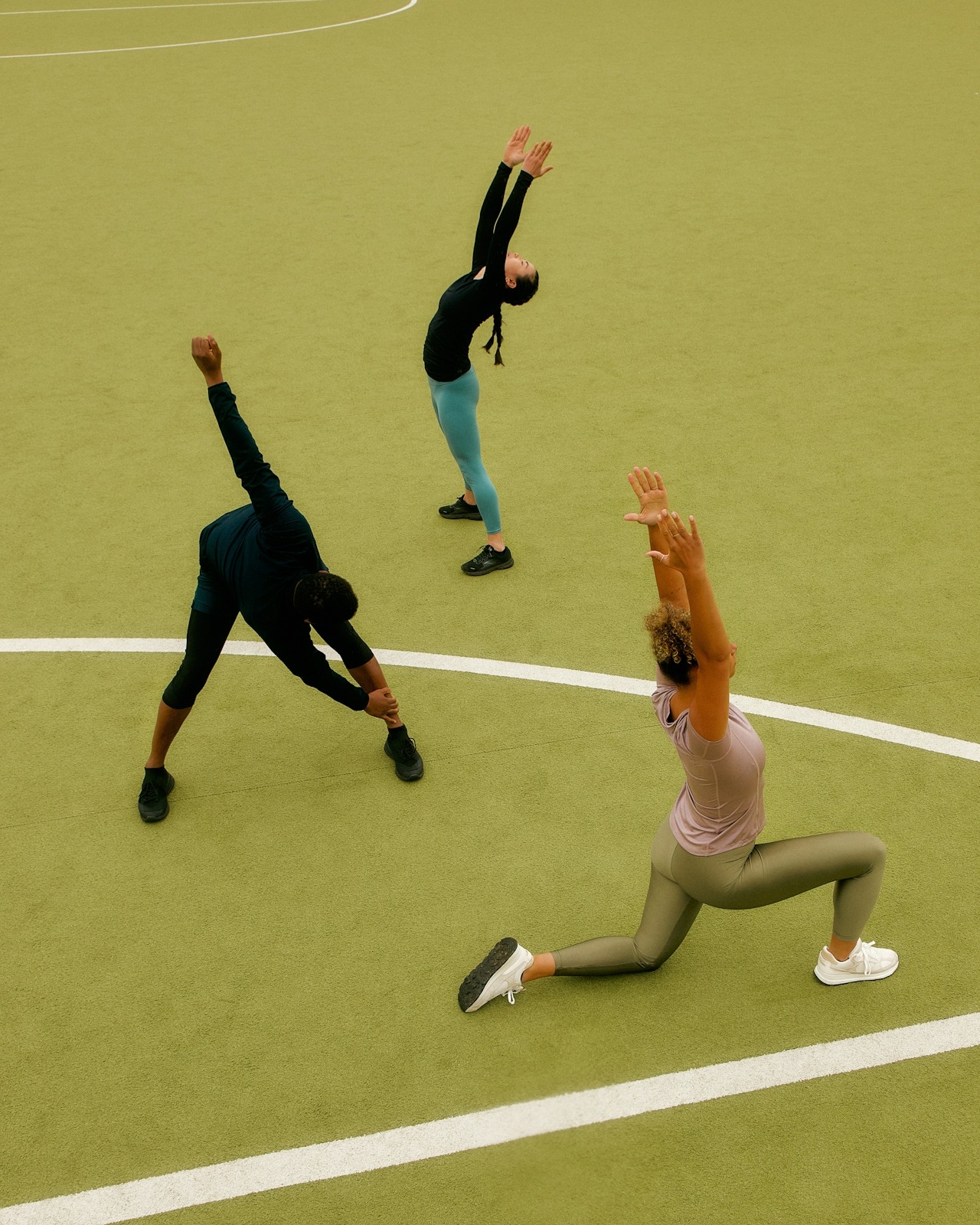
Inspired by the London Marathon coming up later this month this article will explore activewear. We will look at how activewear has evolved across the centuries — and why the colours you choose to wear while exercising might matter more than you think. Before we share our picks of some of the best activewear pieces of Spring/Summer 2026, here is a look at the fascinating history behind what we wear to move in, and how colour became one of its most powerful tools.
Ancient Civilisations: Movement Without Fabric
The history of activewear begins in the ancient world, though not quite as we might imagine it. In ancient Greece, athletes did not train or compete in clothing at all — the word gymnasium derives from the Greek gymnos, meaning naked. The Olympic Games were performed in the nude as a celebration of the human form. Roman athletes, by contrast, typically wore simple loincloths or short tunics during exercise and competition. The sports of the ancient world — running, wrestling, boxing, javelin, and discus — required total freedom of movement, and the solution was simply to wear as little as possible. Fabric was not yet the tool; the body was.
Pre-Victorian Era: Sport as Social Performance
As sport gradually emerged as a leisure activity for the upper classes in the centuries before the Victorian era, it was played in clothing that was barely distinguishable from formal dress. Cricket, golf, horse riding, hunting, and walking were all popular sports, yet participants dressed to reflect their social standing rather than their sporting needs. Practicality was secondary. Colour, at this point, was a signifier of wealth and refinement — not something designed to energise or motivate.
The 19th Century: Organised Sport, Rigid Rules
The 19th century saw sport become increasingly organised and competitive. Lawn tennis, croquet, cycling, archery, rowing, and the early forms of football all flourished. And yet, despite the growing demands of sport, what people wore to participate remained deeply shaped by social convention.
Women were particularly restricted. Corsets, long heavy skirts, and high collars were considered appropriate even on the tennis court or the bicycle path. Wool dominated as the fabric of choice — a practical decision, as it absorbs moisture well — but it was heavy, structured, and wholly unsuited to athletic movement. The idea that clothing might serve the sport, rather than simply reflect the wearer's respectability, had not yet taken hold.
Change, when it came, arrived in the form of bloomers — loose-fitting trousers gathered at the ankle, championed in the 1850s by American activist Amelia Bloomer as a form of dress reform. They were controversial, but they were the first real acknowledgement that women's bodies deserved to move freely. In terms of colour, activewear of this era remained largely muted: dark navies, greys, whites, and creams predominated, keeping exercise firmly aligned with propriety.
Early 20th Century: Performance Begins to Lead
The arrival of international competition — most notably the revival of the modern Olympic Games in Athens in 1896 — began to shift the relationship between clothing and sport. When the goal is to win, practicality cannot be ignored. The women's liberation movement of the early 20th century added further impetus, with shorter hemlines and the gradual removal of the corset opening up new possibilities for how women's bodies were allowed to move.
Slowly, clothing began to be developed for sport rather than around social expectation. Colours remained relatively restrained — whites and pale tones were still predominant in many sports — but the principle that sportswear should serve performance was now firmly established.
The 1970s and 80s: The Arrival of Colour
If there is one era that transformed activewear into what we recognise today, it is the fitness boom of the 1970s and 1980s. Jogging became a mainstream pastime, aerobics classes filled leisure centres, gym culture flourished, and professional sport became a global entertainment industry. With this came an explosion of new synthetic fabrics. Lycra (also known as spandex or elastane) had been developed in 1958 by DuPont, and by the late 1970s it was transforming what activewear could do — and how it could look. Nylon and polyester, both developed earlier in the mid-20th century, completed the toolkit, offering materials that were lightweight, durable, and above all, capable of holding vivid, lasting colour in a way that natural fibres simply could not.
This is where activewear's relationship with colour truly began. Bright pinks, electric blues, bold reds, acid yellows — the palette of the 1980s was joyful and unapologetic. And it was not coincidental. Aerobics classes of the era felt more like dance parties than exercise sessions, and the energy of the room was matched by what people wore. Fitness was about feeling good, not just performing well.
Research in the field of enclothed cognition — the study of how clothing affects the wearer's mindset — suggests that the colours we wear genuinely influence how we feel during physical activity. Bright, warm colours such as red and orange are associated with energy and motivation, while cooler tones like blue and green can promote a sense of calm endurance. In short, what you wear to exercise is not just aesthetic — it is part of the experience.
Wearing colours you love may well make exercise feel more enjoyable, and that enjoyment is what keeps us coming back. But beyond mood, there is another dimension to colour worth considering: the shades that genuinely suit your own colouring. Wearing a colour that flatters your complexion does something subtler but equally powerful — it makes you feel good in your own skin, which is an important form of motivation.
The 1990s and 2000s: Sportswear Goes Street
The 1990s brought a new shift. Activewear migrated from the gym to the street, and the line between sportswear and everyday clothing began to blur. Hip-hop culture and the rise of streetwear — with brands like Nike, Adidas, and FUBU becoming cultural touchstones — made tracksuits, trainers, and sports-influenced silhouettes a legitimate part of daily dressing. Colour remained important, though the aesthetic leaned increasingly towards bold logos, colour blocking, and brand identity.
By the 2000s, the concept of wearing activewear recreationally was entirely normalised. Comfort had become aspirational. The palette began to diversify: alongside the bold brights, muted tones and clean monochrome looks found their place.
The 2020s: Personal Style Meets Performance
Today, activewear is arguably at its most exciting point in history. A renewed focus on fitness and wellness has coincided with a fashion moment in which personal expression is paramount. There is no single defining aesthetic. Instead, activewear has become another canvas for individual style.
Whether you are drawn to quiet, earthy tones for a mindful morning run or a vivid, cheerful palette to power you through a spin class, the options are genuinely limitless. And this is exactly where the pleasure lies. Choosing activewear in the colours that make you feel your best is a small, meaningful act of self-expression that can make movement feel like something you want to do.
From the austere wool of the Victorian tennis court to the electric Lycra of an 80s aerobics class, colour has tracked the history of activewear like a thread running through every era. Today you have more choice than ever. Below, we have curated our activewear picks by colour — browse the shades that feel most like you, and if you are not sure where to start, our guide on what colours suit you is a good place to begin.
Red Activewear
Orange Activewear
Yellow Activewear
Green Activewear
Blue Activewear
Pink Activewear
Purple Activewear
Neutral Activewear
Capsule
Pick the Perfect Spring Florals
Best in Bloom 2026.